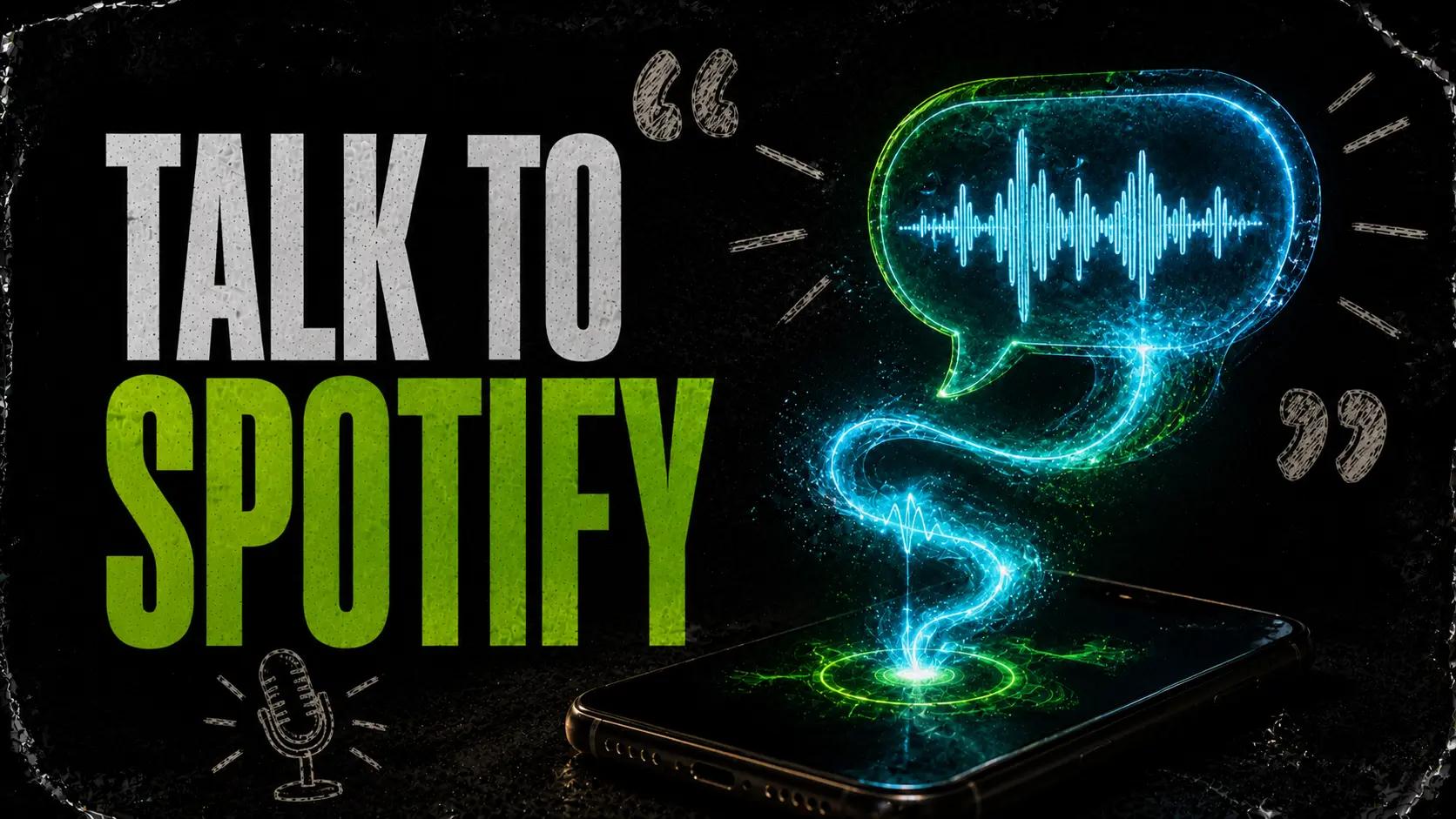
In mid-July 2026, Spotify switched on one of its biggest interface changes in years: a conversational AI assistant that lets Premium listeners talk to the app — literally — to shape what plays next. It launched in beta in the United States, Ireland and Sweden, in English, for users over 18. Here is what it means if you make music or curate playlists.
What the feature actually does
Instead of browsing, eligible listeners can type or speak requests like asking for artists they have never heard before, then refine the session on the fly — narrowing to recent releases, changing the mood, saving songs or following artists mid-conversation. It is discovery as dialogue rather than scrolling, and it builds on the AI groundwork Spotify has been laying for years with the AI DJ and its taste-modeling systems.
The artist backlash arrived within 48 hours
Days after the rollout, Lorde publicly criticized a related AI feature — automatically generated context about songs — after it displayed inaccurate information about one of her tracks, arguing that reducing a song to an AI-written meaning limits free interpretation and asking for an artist opt-out. Spotify removed the specific text. The episode captures the industry"s bigger tension: AI features ship fast, and accuracy plus artist consent lag behind.
What it means for independent artists
- Metadata becomes conversational. If listeners ask for "melancholic Spanish indie for a rainy night", the system needs to know that describes you. Accurate genre tags, moods and a well-written artist bio are now inputs to a conversation engine, not decoration.
- Catalog depth matters more. A conversational session moves fluidly between similar artists. Being adjacent to the right artists — through playlist co-occurrence — determines whether you enter those sessions at all, which is one more reason human playlist placement keeps compounding value.
What it means for curators
Every AI leap triggers the same question: does human curation still matter? The honest answer keeps being yes — arguably more. AI assistants remix what already has signal; human curators create that signal in the first place, especially for new music with no listening history. And as AI-generated content floods the platform, a trusted human filter becomes a differentiator, not a relic. How Spotify"s recommendation stack digests those human signals is exactly what we unpack in our breakdown of the 2026 algorithm.
AI decides faster than ever which music gets surfaced — and it learns from human curation. Whether you are an artist who needs real playlist signal or a curator whose taste is more valuable than ever, CuraPitch connects both sides directly.